Why Commercial Roof Inspections Catch Problems Early
A commercial roof rarely fails all at once. Most of the time, trouble starts small, stays quiet for a while, and spreads because no one has seen the early warning signs yet. That is exactly why inspections matter. They create a regular chance to spot deterioration, identify weak points, and deal with repairable issues before they become disruptive, expensive, or dangerous.
People sometimes think of a roof as a simple barrier overhead, something that is either leaking or not leaking. In practice, the condition of a commercial roof sits on a spectrum. A roof can still be doing its job overall while already showing surface wear, moisture-related concerns, or failures around details such as flashing and penetrations. Those are the kinds of problems that are much easier to manage early than after water has entered the building and moved beyond the original entry point.
Guidance for commercial and industrial buildings is consistent on this point. Maintenance and inspections are meant to find weakness, deterioration, hazards, and needed repairs before conditions worsen. That purpose sounds basic, but it shapes every smart roofing decision a property owner or facility manager makes. When inspections happen regularly, roofing choices become more deliberate. When inspections do not happen, owners tend to learn about roof conditions only after a leak, visible damage, or tenant complaint forces the issue.
Early problems are usually detail problems
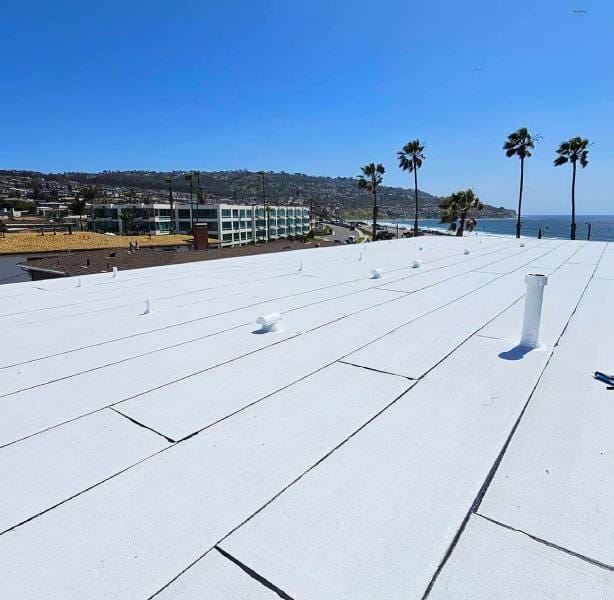
On many commercial roofs, failure begins at the most vulnerable areas rather than across the entire roof surface. Flashing, penetrations, and transitions deserve attention because they are common trouble spots. If those areas fail, water does not need a wide opening to cause trouble. A relatively small weakness can let moisture in, and once moisture gets into the assembly or into the building, the issue becomes more complicated to track and correct.
This is where inspections earn their value. They create a habit of looking closely at the points where roofs are most likely to break down first. A roof may appear acceptable from a distance and still have developing failures at edges, seams, flashing lines, or penetrations. An annual inspection, which Seattle guidance specifically recommends for roofs, is a practical checkpoint for spotting those issues while repair is still a realistic option.
Age matters too, but age never tells the whole story by itself. Roof condition should be judged by both age and visual inspection. That balance is important because some roofs show wear sooner in certain areas, while others hold up well overall but develop localized problems that need attention. A date on a maintenance record cannot tell you what a trained eye can see on the roof itself.
What inspectors are trying to catch before it spreads
An inspection is not just a formality. It is an effort to answer a practical question: what is beginning to fail here, and what happens if no one addresses it now? In commercial settings, that question matters because roof problems rarely stay confined to the roof. Moisture can travel. A leak that starts at one point can show up somewhere else indoors, which is one reason leak complaints can be misleading if people jump straight to repairs without investigating the source.
Several conditions deserve close attention during commercial roof inspections:
- persistent leaks
- visible surface deterioration
- failures at flashing
- problems around penetrations
- signs of moisture-related issues
None of those conditions automatically means full replacement is needed. That distinction matters. Verified guidance makes clear that a roof should be considered for replacement when it shows clear deterioration or damage rather than minor repair needs. In other words, inspections help separate roofs that need maintenance from roofs that have reached a more serious stage of decline.
That distinction can save owners from two costly mistakes. The first is overreacting and replacing a roof that could still perform well with targeted repairs. The second is underreacting and continuing to patch a roof that is already showing clear evidence of broader failure. Good inspections help avoid both.
The real cost of waiting for a leak
A lot of building owners first think seriously about the roof when water appears inside. That reaction is understandable, but it puts the building at a disadvantage from the start. By the time water is obvious indoors, the roof problem is no longer just a roof problem. It has already crossed a line from exterior wear into interior impact.
Even then, the source may not be as obvious as it seems. Industry guidance advises that when a roof leak occurs, a thorough investigation by qualified roofing professionals or consultants is needed to determine the actual source of water entry and what repair is required. That advice reflects a simple truth from real roof work: the place where water shows up is not always the place where it got in.
This is one of the strongest arguments for regular inspections. If weaknesses are identified before a reported leak, repair work can be more focused and less reactive. The roofer is not starting from a cold emergency call with incomplete information. There may already be a condition record, earlier observations, or known vulnerable points that help narrow the issue. That context improves judgment.
It also reduces the temptation to rely on guesswork. Guesswork is a common reason roof problems linger. A patch goes on the area nearest the stain, the leak seems better for a while, and then the problem returns because the original entry point was somewhere else. Early inspections reduce that cycle because they are designed to identify deterioration before it turns into a mystery.
Small maintenance can preserve useful roof life
There is a practical, unglamorous side to roof inspections that often gets overlooked. They support maintenance that can extend roof life. That does not mean every roof can or should be stretched indefinitely. It means localized issues such as moisture problems or failed flashing can often be corrected early, before they trigger larger leak-related or structural failures.
That is a major difference. Once a problem is allowed to grow, the conversation changes. Instead of asking whether a detail can be repaired, the owner may be asking whether broader weather protection has been compromised. In Seattle, for example, a roof that is not weather-proof or has clear evidence of leaking is specifically treated as a maintenance problem in city inspection criteria. That framing reflects what experienced property managers already know: roof integrity is not cosmetic. It is fundamental building upkeep.
A disciplined inspection and maintenance approach supports that goal. It helps owners keep roofs in good repair rather than waiting for conditions to become obvious enough to force emergency spending. The return is not just financial. It also shows up in smoother operations, fewer disruptions, and fewer surprises for tenants or staff.
That is one reason many owners use commercial roofing services as part of a broader building maintenance strategy rather than only as an emergency response. The most useful roofing relationship is often the one that starts before a crisis.
Inspections improve decisions, not just roofs
One of the less talked-about benefits of inspections is how much better they make planning. Without current information, owners tend to make roof decisions from memory, rough estimates, or worst-case assumptions. With inspection findings in hand, decisions become more grounded.
That can affect whether an owner budgets for immediate repairs, monitors a condition for a defined period, or starts preparing for eventual replacement. It can also help shape conversations with tenants, internal stakeholders, or property investors. “We know the roof is aging” is vague. “The roof is aging, but the main concern right now is deterioration at vulnerable details and those repairs should be addressed promptly” is much more actionable.
There is also a compliance angle. In Seattle, inspection frameworks emphasize keeping buildings safe, accessible, and in good repair. Roof inspections fit neatly into that expectation because they help identify whether the roof remains weather-proof and whether visible leaking or deterioration has become a maintenance issue. While the exact legal and permitting requirements can vary by project and building type, the larger point remains the same. Regular inspections support better upkeep and better decisions.
Replacement is not the same as repair, and inspections help clarify which is needed
Owners sometimes ask the wrong first question. They ask, “How long can we keep patching this?” when the better question is, “What is the roof telling us now?” Inspection answers that.
If the roof has minor repair needs, targeted maintenance may be the responsible path. If it has clear deterioration or damage, especially when problems are persistent, the roof may need to be considered for replacement instead. Inspections are what make that distinction credible. They turn roofing from a series of reactions into a condition-based decision.
This is where judgment matters. A single leak does not automatically prove the whole roof is finished. At the same time, a roof with repeated leaks, visible surface deterioration, and failures at flashing or penetrations should not be treated as a minor nuisance. Those are warning signs that deserve a broader evaluation.
Inspections also help owners avoid the false economy of repeated short-term fixes. On paper, small repairs can seem cheaper than major work. In practice, repeated repairs on a roof with clear deterioration can add up while the underlying condition continues to decline. The earlier that trend is recognized, the more options an owner usually has.
Why qualified investigation matters after a leak
Once a leak has occurred, speed matters, but so does discipline. The pressure to “just stop the water” can push people toward surface-level fixes that do not address the true source. That is why guidance from the roofing industry stresses a thorough investigation by qualified professionals or consultants after a leak is reported.
The word thorough is doing important work there. Roof leaks can be deceptive. Water may enter through one failed detail, move through the assembly, and become visible somewhere that has no obvious rooftop defect directly above it. Without a careful investigation, the response can become trial and error.
A good inspection history makes that investigation better. If a roof has documented areas of concern, especially at flashing or penetrations, those details can be checked first. If there is already a record of visible deterioration in a particular section, the investigation has a starting point rooted in actual observation rather than assumptions.
This is another reason early inspections pay off even when they do not uncover a major problem. They build a clearer understanding of the roof over time. That understanding is valuable the moment something changes.
What annual inspections do better than occasional check-ins
There is a difference between looking at a roof once in a while and inspecting it on a regular schedule. Annual inspections, which Seattle guidance recommends, create continuity. That continuity helps people notice progression. A condition that seems minor on one date can look very different a year later, and without a prior benchmark it is harder to judge whether the issue is stable or advancing.
Annual inspections also fit the way many commercial roofs age. Deterioration is often gradual until it is not. A roof may seem fine for long stretches, then cross into obvious failure at one vulnerable area. Regular inspection narrows that blind spot. It reduces the time between the beginning of a problem and the moment someone sees it.
That is especially helpful because roof condition should be judged by both age and visual inspection. Some owners lean too heavily on age and assume a roof is fine because it is not “old enough” yet. Others assume any older roof must be near the end. Neither approach is as reliable as inspection backed by observation. A younger roof can still have a failed detail. An older roof can still be serviceable if its condition supports that conclusion.
Permits, projects, and why commercial roofs need careful handling
Roofing decisions do not happen in a vacuum. Repair and replacement requirements can vary by building type and jurisdiction. Seattle’s permit guidance makes this clear by distinguishing some residential situations from the city process that applies to commercial projects. That matters because owners should not assume that what is allowed on a detached house applies to a commercial building.
Regular inspections help here too, because they give owners a clearer basis for deciding what kind of work may be needed. If findings point to maintenance and localized repair, the next steps may differ from a situation where broader deterioration suggests replacement. Either way, the process is smoother when the owner is acting from observed roof condition rather than from a vague sense that something seems off.
This is another place where experienced commercial roofing services can be useful. Not because they magically remove complexity, but because they understand the difference https://pub-1e9a3ab35d21420997aca56be773e93c.r2.dev/commercial/why-commercial-roof-inspections-catch-problems-early.html between a roof that needs maintenance, a roof that needs further investigation, and a roof that may be approaching replacement territory.
The earlier you know, the more options you keep
That may be the simplest way to understand the value of inspections. Early knowledge preserves options. When an issue is small, the owner can choose from more practical responses. When the issue grows unchecked, options narrow.
A roof inspection can reveal that the building only needs localized repairs and continued monitoring. It can reveal that persistent leaks are no longer isolated annoyances but part of a broader pattern. It can show that visible deterioration has moved beyond the point where patching makes sense. It can confirm that vulnerable details such as flashing and penetrations need prompt attention before moisture causes more trouble.
All of those outcomes are useful because they move the owner closer to the right action. That is what inspections are really for. Not paperwork, not box-checking, not alarmism. Clearer decisions based on actual roof condition.
For commercial properties, that clarity is hard to overstate. A roof is too important to manage by guesswork and too expensive to ignore until water appears indoors. Regular inspections, especially annual ones, catch weakness and deterioration while there is still time to respond thoughtfully. They help keep buildings weather-proof, in good repair, and safer to operate. Most of all, they turn roof care from a crisis-driven task into a manageable part of responsible property ownership.
That is why roof inspections catch problems early. They create the moment when small signs are still visible, still understandable, and still fixable before they become something larger.